
Inclusion
Inclusive practice is central to our ethos and is a shared responsibility between staff, pupils and parents/carers. We aim to equip all children with the skills they need to become independent, inquisitive learners both in and beyond the classroom, and to ensure that those with SEND transition smoothly to the next stage of their education - prepared academically, socially and emotionally.
For most pupils, classroom teaching provides all the support they need as part of the ordinary available provision. Some may benefit from additional short-term, targeted interventions, while our SEND strategies build on excellent teaching and are tailored to individual needs. At the Gem Federation, we aim to create a positive, inclusive environment where all pupils can engage fully in their learning - without exception.
-
SEND information report 2025-2026
download_for_offline
download_for_offlineSEND information report 2025-2026
- The Gem Federation - Whole School Provision Map 1 download_for_offline
download_for_offlineThe Gem Federation - Whole School Provision Map 1
The Range of Support
The Inclusion Team works closely with the Senior Leadership Team and teaching staff, using whole-school assessment data as a key indicator for identifying emerging needs. In addition to tracking pupil progress over time, we draw on a wide range of information, including screening tools, reports from other services, liaison with previous educational settings and external agencies, and concerns raised by pupils, parents/carers and school staff. All staff receive training in relevant strategies and interventions, enabling them to deliver targeted small-group or one-to-one support and adapt their practice to meet the needs of individual pupils.
Inclusion Resources and Information
Cognition and Learning
What is Communication and Interaction?
This is when a child has difficulty speaking, understanding language, or interacting with others.
Examples include Autism Spectrum Condition (ASC) and Speech and Language Difficulties.
-
9 Tips for helping a child with processing difficulties
download_for_offline
download_for_offline9 Tips for helping a child with processing difficulties
- Paired reading information sheet download_for_offline
download_for_offlinePaired reading information sheet
- Supporting Spelling download_for_offline
download_for_offlineSupporting Spelling
Web resources
Top Marks - https://www.topmarks.co.uk/
Touch Typing - https://gemfederation.edclub.com/
Phonics Play - https://www.phonicsplay.co.uk/resources
Spelling Frame - https://spellingframe.co.uk/
Busy Things - https://www.busythings.co.uk/play/?try=choose
Maths Frame - https://mathsframe.co.uk/
Literacy Shed - https://www.literacyshed.com/en-gb/browse/adventure-shed
Oxford Owl - https://www.oxfordowl.co.uk/for-school/oxford-owl-ebook-collection
Communication and Interaction
What is Communication and Interaction?
This is when a child has difficulty speaking, understanding language, or interacting with others.
Examples include Autism Spectrum Condition (ASC) and Speech and Language Difficulties.
-
Colourful semantics cue cards
download_for_offline
download_for_offlineColourful semantics cue cards
- Colourful Semantics who doing what where download_for_offline
download_for_offlineColourful Semantics who doing what where
- Evening routine download_for_offline
download_for_offlineEvening routine
- Home Pack Symbols download_for_offline
download_for_offlineHome Pack Symbols
- Identifying and Supporting language needs at home 0-5 years download_for_offline
download_for_offlineIdentifying and Supporting language needs at home 0-5 years
- Makaton signing booklet download_for_offline
download_for_offlineMakaton signing booklet
- Morning routine download_for_offline
download_for_offlineMorning routine
- Now and next board download_for_offline
download_for_offlineNow and next board
- Special Time Information Sheet for Parents download_for_offline
download_for_offlineSpecial Time Information Sheet for Parents
- Talk together ideas 0-5 years download_for_offline
download_for_offlineTalk together ideas 0-5 years
- The Gem Federation Speech Production Information and Support For Parents and Carers download_for_offline
download_for_offlineThe Gem Federation Speech Production Information and Support For Parents and Carers
- Toilet routine Skirt download_for_offline
download_for_offlineToilet routine Skirt
- Toilet routine Trousers download_for_offline
download_for_offlineToilet routine Trousers
Social, Emotional and Mental Health
What is Social, Emotional and Mental Health (SEMH)?
This is when a child struggles with managing emotions, behaviour, or mental health.
Examples include ADHD, Anxiety, and Attachment Difficulties.Visit the below link to access an Emotion Coaching webinar:
https://www.youtube.com/watch?v=Drla1RlmcUw&ab_channel=LambethEPS
-
A to Z of coping
download_for_offline
download_for_offlineA to Z of coping
- Book Recommdations and Signposting download_for_offline
download_for_offlineBook Recommdations and Signposting
- Connect Before Correct Summary download_for_offline
download_for_offlineConnect Before Correct Summary
- Coping with grief download_for_offline
download_for_offlineCoping with grief
- Growing around grief download_for_offline
download_for_offlineGrowing around grief
- Local and National Mental Health and Emotional Wellbeing Support download_for_offline
download_for_offlineLocal and National Mental Health and Emotional Wellbeing Support
- Starting secondary school and taking the SATS download_for_offline
download_for_offlineStarting secondary school and taking the SATS
- Supporting children through frightening events download_for_offline
download_for_offlineSupporting children through frightening events
- Taking Turns Social Story download_for_offline
download_for_offlineTaking Turns Social Story
- Time Out Social Story download_for_offline
download_for_offlineTime Out Social Story
- Upstairs Downstairs Brain Integration download_for_offline
download_for_offlineUpstairs Downstairs Brain Integration
- We All Grieve download_for_offline
download_for_offlineWe All Grieve
Sensory and/or Physical
What is Sensory and/or Physical Needs?
This is when a child has a disability or medical need that affects their ability to access learning.
Examples include Hearing or Visual Impairment, Physical Disabilities, and Sensory Processing Difficulties.-
Additional tools social stories
download_for_offline
download_for_offlineAdditional tools social stories
- Anxiety social story download_for_offline
download_for_offlineAnxiety social story
- Bedtime routine download_for_offline
download_for_offlineBedtime routine
- Class photo day social story download_for_offline
download_for_offlineClass photo day social story
- Crush social story download_for_offline
download_for_offlineCrush social story
- Dyslexia social story download_for_offline
download_for_offlineDyslexia social story
- Flexibility scripts download_for_offline
download_for_offlineFlexibility scripts
- Growth Mindset Social Story download_for_offline
download_for_offlineGrowth Mindset Social Story
- I am Autistic download_for_offline
download_for_offlineI am Autistic
- It is okay to lose download_for_offline
download_for_offlineIt is okay to lose
- Marvellous Mistakes download_for_offline
download_for_offlineMarvellous Mistakes
- Relaxation Script for Younger Children download_for_offline
download_for_offlineRelaxation Script for Younger Children
- The Learning Journey download_for_offline
download_for_offlineThe Learning Journey
- Timeout social story download_for_offline
download_for_offlineTimeout social story
EAL
One of the great things about The Gem Federation is that our children come from all over the world! We are so lucky that there are over 30 different languages spoken across the year groups.
Whole School Approach to EAL
Our staff are trained in supporting the learning of children who have English as an additional language. They implement a variety of strategies in the classroom to aid children’s development of English, including:
- Adjustments to classroom organisation – for example pairing an EAL learner with a language buddy
- Ongoing differentiation – for example using visual supports during lessons
- Focusing on Language – for example pre-teaching key vocabulary
- Marking and Feedback – for example using visual or verbal rather than written feedback
- Communication with home – for example sending home additional language activities
For more information on the types of supports available for EAL learners in the classroom please click on the link below:
Classroom_Support_Strategies_Working_with_EAL_Learners
Students who are new to English
At Bessemer we offer EAL interventions for learners who are new to English. All EAL learners are assessed by their class teachers using the 5 EAL Stages.
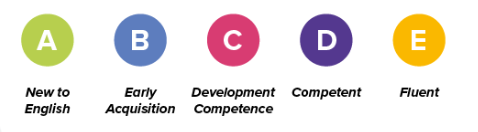
EAL proficiency assessment framework Children identified as Stage A or B EAL learners receive additional intervention, which includes target setting and termly assessment in the following areas:
- Listening
- Speaking
- Reading and Viewing
- Writing
For more information on our EAL assessment system please click on the link below.
https://www.bell-foundation.org.uk/eal-programme/eal-assessment-framework/
Guidance for Parents
-
Guidance for Parents Arabic
download_for_offline
download_for_offlineGuidance for Parents Arabic
- Guidance for Parents Bengali download_for_offline
download_for_offlineGuidance for Parents Bengali
- Guidance for Parents Chinese download_for_offline
download_for_offlineGuidance for Parents Chinese
- Guidance for Parents English download_for_offline
download_for_offlineGuidance for Parents English
- Guidance for Parents Pashto download_for_offline
download_for_offlineGuidance for Parents Pashto
- Guidance for Parents Polish download_for_offline
download_for_offlineGuidance for Parents Polish
- Guidance for Parents Russian download_for_offline
download_for_offlineGuidance for Parents Russian
- Guidance for Parents Somali download_for_offline
download_for_offlineGuidance for Parents Somali
- Guidance for Parents Spanish download_for_offline
download_for_offlineGuidance for Parents Spanish
- Guidance for Parents Turkish download_for_offline
download_for_offlineGuidance for Parents Turkish
- Guidance for Parents Ukrainian download_for_offline
download_for_offlineGuidance for Parents Ukrainian
- Guidance for Parents Urdu download_for_offline
download_for_offlineGuidance for Parents Urdu
Feel free to download additional languages here: Parental Involvement - The Bell Foundation (bell-foundation.org.uk)
For more information on how you can use home languages to support home learning and school work/ accessing the English education system please click on the link below:
https://www.bell-foundation.org.uk/eal-programme/guidance/parental-involvement/
Transition
-
Helping your child to transition out of the summer holidays
download_for_offline
download_for_offlineHelping your child to transition out of the summer holidays
- School anxiety talk prompts download_for_offline
download_for_offlineSchool anxiety talk prompts
- Summer Calendar and activity book download_for_offline
download_for_offlineSummer Calendar and activity book
- Transition social story 1 download_for_offline
download_for_offlineTransition social story 1
- Transition social story 2 download_for_offline
download_for_offlineTransition social story 2
- Transition social story 3 download_for_offline
download_for_offlineTransition social story 3
Medicine
There is no legal duty that requires school staff to administer medicines. However, in exceptional circumstances we would be willing to undertake this task under the following conditions:
- Every case is looked at individually and a decision between the Headteacher, key staff and professionals will take place to determine if it is appropriate or not for staff to administer the medication.
- Consultation with parents/guardians will need to take place prior to administration.
- Children must not keep their own medicines in school.
- It is the responsibility of parents to notify the school in writing if the pupil’s need for medication has ceased.
- There must be clear dialogue between parents/guardians/Health Professionals before any medication is administered to children who have long term or complex medical needs. This will require:
- Health professionals to give relevant training before any member of staff will administer medicines.
- Before any medicines will be administered a healthcare plan must be written by the Health professional.
- If a child refuses to take their medication staff will not force them to do so and will inform the parents of the refusal as a matter of urgency, on the same day. If a refusal to take medicines results in an emergency, the school’s emergency procedures will be followed.
Supporting Children with Medical Needs in School
Permission for Medicine at School Form
Self-Referral
-
Parent Consultation Leaflet
download_for_offline
download_for_offlineParent Consultation Leaflet
- VIG Information leaflet download_for_offline
download_for_offlineVIG Information leaflet
Speech and Language Drop in for Under 5s
FAQ
-
Autism and Cherry Garden Support
download_for_offline
download_for_offlineAutism and Cherry Garden Support
- Bereavement Advice download_for_offline
download_for_offlineBereavement Advice
- Dyslexia Advice and Support download_for_offline
download_for_offlineDyslexia Advice and Support
- EHCP FAQ download_for_offline
download_for_offlineEHCP FAQ
- External professionals FAQ download_for_offline
download_for_offlineExternal professionals FAQ
- Financial Support Information Sheet download_for_offline
download_for_offlineFinancial Support Information Sheet
- General SEND FAQ download_for_offline
download_for_offlineGeneral SEND FAQ
- How CAMHS Work with Schools download_for_offline
download_for_offlineHow CAMHS Work with Schools
- How Educational Pyschologists Work with Schools download_for_offline
download_for_offlineHow Educational Pyschologists Work with Schools
- How Speech and Language Therapy Is Delivered download_for_offline
download_for_offlineHow Speech and Language Therapy Is Delivered
- SEND Jargon Buster download_for_offline
↑download_for_offlineSEND Jargon Buster
- Sleep and Focus Information Sheet download_for_offline
download_for_offlineSleep and Focus Information Sheet
- Special Education Needs and Education Health Care Plans FAQ download_for_offline
download_for_offlineSpecial Education Needs and Education Health Care Plans FAQ
- Specific Learning Difficulties Information download_for_offline
download_for_offlineSpecific Learning Difficulties Information
- Bereavement Advice download_for_offline
- VIG Information leaflet download_for_offline
- School anxiety talk prompts download_for_offline
- Guidance for Parents Bengali download_for_offline
- Anxiety social story download_for_offline
- Book Recommdations and Signposting download_for_offline
- Colourful Semantics who doing what where download_for_offline
- Paired reading information sheet download_for_offline
- The Gem Federation - Whole School Provision Map 1 download_for_offline